Monday, September 28, 2026

Bullfrog brains have a hidden superpower

A bullfrog sits in front of grass.

Researchers have uncovered a hidden biological superpower in bullfrogs: When their brains run low on energy, they can make their own emergency fuel supply.

That could mean good things for human health.

For decades, scientists believed most animals relied on a steady supply of glucose, the body’s primary fuel source, to power their brains. When glucose runs out, neural activity begins to fail, potentially leading to lasting brain damage.

Now, researchers at the University of Missouri have discovered that bullfrogs don’t follow that fundamental rule. Instead, when glucose becomes scarce, their brains can produce an alternative energy source known as ketone bodies, allowing critical neural functions to continue.

In most animals, ketone bodies are produced in the liver when glucose levels drop during conditions such as fasting, starvation or prolonged exercise. The liver breaks down fatty acids into these energy molecules, which then travel through the bloodstream to organs, including the brain, where they are used as fuel.

But the researchers discovered that bullfrogs can completely bypass that process. Instead of relying entirely on the liver, their brains can generate ketones locally, creating an emergency energy reserve exactly where it’s needed most.

“Scientists generally believe ketones are delivered to the brain from elsewhere in the body,” says Joseph Santin, an associate professor of biological sciences and lead author of the study.

“That’s what makes this discovery so exciting. It’s like finding a backup generator inside a building that everyone assumed had only one power source.”

The finding helps explain how bullfrogs survive one of the most challenging periods of their year. Each winter, they enter a hibernation-like state that slows their metabolism and depletes energy reserves.

By spring, when oxygen and energy stores are running low, the animals must immediately reactivate essential brain circuits that control bodily functions. The newly discovered metabolic backup system may be one reason why they can make that transition so quickly and successfully.

The research builds on years of work in Santin’s lab exploring how frogs endure conditions that would severely damage or even kill most animals. Previous studies revealed that this hibernation-like state helps protect neural circuits during extreme oxygen deprivation. The new findings uncover another layer of that survival strategy: the ability to maintain brain activity when glucose metabolism is compromised.

The discovery also raises important questions about what triggers the switch to ketone production and how long bullfrogs can sustain it. Researchers do not believe the metabolic shift is permanent, but it appears to provide a robust backup system when the brain’s usual energy supply falls short.

While the findings offer new insight into amphibian biology, Santin believes they may also help scientists better understand the human brain because bullfrogs and humans share many of the same fundamental biological processes.

By revealing how brains adapt when energy supplies become limited, the research could open new avenues for studying neurological disorders linked to impaired energy metabolism, including Alzheimer’s disease, ALS, and schizophrenia.

The study appears in the Proceedings of the National Academy of Sciences.

Source: University of Missouri

The post Bullfrog brains have a hidden superpower appeared first on Futurity.


from Futurity https://ift.tt/dz21kmu

Hidden brain region helps regulate metabolism

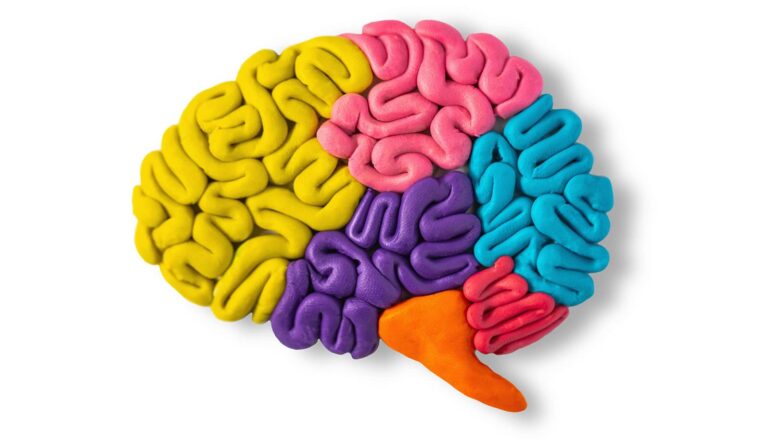
A model of the human brain made out of colorful clay.

A new study identifies the first known function of an understudied brain region that helps coordinate how the body responds to cold temperatures and regulates metabolic health.

When the body’s temperature falls, it adapts by burning more energy to generate heat and triggering appetite to replace the fuel used to stay warm.

While scientists have known about those responses for decades, precisely how the brain coordinates that process has remained unclear.

New research led by University of South Florida Health’s Yong Xu uncovered new clues to that puzzle in a little-studied region of the brain.

In a study in Neuron, researchers working in non-human models identified a previously unknown brain circuit that turns a drop in temperature into a coordinated response regulating eating, heat production, and energy use in the body.

The discovery represents the first known function of a previously underexamined brain region in the back part of the hypothalamus called the dorsal posterior periventricular hypothalamic nucleus, or dPVp, a region that has received little attention by researchers.

“We identified a very understudied brain region and then found the first function for that brain region,” says Xu, professor in the psychiatry and behavioral neurosciences department at the USF Health Morsani College of Medicine and director of the Center for Molecular Psychiatry.

“The basic function of the dPVp is to sense temperature fluctuations and then coordinate a comprehensive set of behaviors or metabolic changes to deal with cold exposure.”

The study shows that dPVp functions as a cold-response control center in the brain, becoming highly active when body temperatures drop and activating neurons that intensify the desire to eat and increase the body’s ability to up its heat production.

To determine the region’s function, researchers experimentally manipulated activity of cold-responsive neurons within the dPVp, revealing its central role in coordinating the body’s behavioral and metabolic responses to cold exposure.

Activating dPVp neurons produced unexpected metabolic effects, Xu says, increasing the drive to consume more food while also burning more energy, helping prevent weight gain, and improve glucose regulation.

The study also identified a biological “cold sensor” protein within dPVp neurons helping brain cells detect the cold and coordinate the body’s response.

Known as KCNK2 or TREK-1, this cold sensor offers researchers a potential new target for developing drug therapies that could mimic the metabolic benefits associated with a response to cold exposure.

“One of the future directions is to use that as a drug target to try to develop highly selective inhibitors for KCNK2 as a future medicine,” says Hailan Liu, faculty member in the USF Health Center for Molecular Psychiatry and first author on the study.

The findings could hold long-term implications for treating obesity, type 2 diabetes, and other metabolic disorders. While many current approaches focus on reducing appetite, future treatments could instead target the newly identified pathway to improve metabolic function by helping the body burn and use more energy.

“If successful treatments were developed targeting the cold sensor, we wouldn’t have to expose people to cold temperatures to achieve those benefits,” Xu says. “One could maintain metabolic health without dieting.”

Source: University of South Florida

The post Hidden brain region helps regulate metabolism appeared first on Futurity.


from Futurity https://ift.tt/7qirdJf

Sunday, September 27, 2026

The right messages can help restore trust in elections

Many "I voted" stickers sit in a pile on a folding table.

Election officials can build public trust in procedures and results—even among suspicious voters who fear partisan manipulation—by creating videos that factually explain their security safeguards in simple terms.

Such are the findings of studies coauthored by a University of California, Riverside scholar, offering sound strategies for election officials to respond to false claims and conspiracy theories about election fraud and security, as well as suspicions that arise when the counting of mail-in ballots delays results.

“If election officials explain why a delay might occur in advance, then voters are less likely to have a negative response,” says Jennifer Gaudette, an assistant professor in the UCR School of Public Policy and coauthor of the research published in the Election Law Journal, British Journal of Political Science, and PNAS Nexus.

In their recently published Election Law Journal article, the researchers examined a challenge built into America’s decentralized election system. While states have broad authority to set their own election rules, they mostly follow the same security procedures. But voters typically know little about how elections are run in other states. Partisan distrust can fill that information gap.

For example, Gaudette and her colleagues found that Republicans nationwide were less likely to trust elections in heavily Democratic California, while Democrats nationwide expressed less confidence in elections in Republican-dominated Texas.

While the team previously established that simple, factual videos about election security could increase voters’ trust in elections, they wanted to know if that same factual information could change partisan views about other states.

The team conducted survey experiments involving nearly 15,000 people. Participants came from a nationwide sample and samples in Texas, Georgia, Colorado, and Los Angeles County.

Some watched videos produced by election officials explaining safeguards used to protect votes. Texans and Georgians watched messages about California elections. Colorado and Los Angeles County participants watched videos about Texas. The national sample was divided between California and Texas messages.

The results were significant.

After watching the videos, trust in elections in the targeted states increased by an average of 10 to 12.5 percentage points, and the improvement crossed party lines. Republicans became more trusting of elections in Democratic states, Democrats became more trusting of elections in Republican states, and independents also showed gains.

The findings suggest partisan distrust of election security isn’t necessarily set in stone.

“You can move people on this by giving them the facts,” Gaudette says.

A related experiment in a follow-up study suggests election officials don’t need Hollywood-style production values to change minds.

An informal vertical cellphone video Gaudette recorded herself worked about as well as professionally produced videos.

For that research, Gaudette sat in her car and recorded herself speaking directly into her cellphone camera. She explained two basic election-security facts: Voting machines are not connected to the internet, and ballot counting has bipartisan oversight.

More than 8,000 Americans participated in the cellphone video study. Some watched Gaudette’s informal social media-style video. Others watched professionally produced videos from election officials in Dane County, Wisconsin, and Maricopa County, Arizona.

The homemade video produced similar increases in election trust as the professionally produced ones when compared with those who watched no election video.

It was also more memorable. People who watched Gaudette’s cellphone video were 8 to 9 percentage points more likely than those who watched the official videos to correctly remember the two election-security facts.

Younger adults were particularly receptive. Just 3% of respondents ages 18 to 24 described the informal video as misleading, compared with 15% of those 55 and older.

“State and local officials should work hard to communicate to people on a variety of platforms because social media is where many of these claims explode,” Gaudette says.

“They should explain how our ballots are kept secure, how vote counting works, and why it can sometimes lead to delays.”

In addition to Gaudette, coauthors are from UC San Diego; USC Center for Inclusive Democracy; the University of Georgia.

Source: UC Riverside

The post The right messages can help restore trust in elections appeared first on Futurity.


from Futurity https://ift.tt/SQ5wdbo

How do cosmic rays from outer space enter Earth’s atmosphere?

A man standing in the snow looks up at the Northern Lights, which appear green in the night sky.

Researchers have used CERN’s Large Hadron Collider to model how high-energy cosmic rays enter the Earth’s atmosphere.

The Northern Lights, which occur when particles from the Sun enter the Earth’s atmosphere, generate brilliant sky displays in our Northern Hemisphere, offering an occasional cosmic show enjoyed by millions.

But how collisions between these particles, or low-energy cosmic rays, and the Earth’s gases result in the Northern Lights are less well-understood.

Even more puzzling are collisions involving high-energy cosmic rays, which possess more than one million times the energy than those from the Sun and emanate from exploding stars, or supernovae. Scientists have typically relied on computer simulations to unpack their collision with Earth’s atmosphere, but these methods have produced varied, and sometimes conflicting, results.

New research by an international team of physicists takes an unprecedented approach that offers a clearer understanding of these interstellar wonders.

Using CERN’s Large Hadron Collider, the scientists have recreated how high-energy cosmic rays enter the Earth’s atmosphere and collide with our planet’s gases.

The results in the journal Physical Review Letters help decipher the origins of interstellar particles from the cosmos.

“We now have a better understanding of how particles from objects more exotic than the Sun interact with our atmosphere,” says Jesse Liu, a New York University assistant professor of physics who led the research.

“By advancing our knowledge of high-energy cosmic collisions in the Earth’s atmosphere, we have taken another step to unraveling the many mysteries of our universe.”

“The published results are indeed something special because these data are unique, and in our measurements, we were able to show that our previous models for this type of interaction are actually very inaccurate,” adds Cigdem Issever, a physicist at Humboldt-University of Berlin and one of the paper’s authors.

Recognizing the limitations of computer simulations, Liu, Issever, and their colleagues, who included scientists from Hamburg’s DESY Research Center, turned to the Large Hadron Collider (LHC)—the world’s most powerful particle physics machine, located outside of Geneva—to devise an innovative experiment that mimics how high-energy cosmic rays collide with the Earth’s atmosphere.

Focusing on oxygen’s foundational role in Earth’s atmosphere, the scientists introduced oxygen beams for the first time in the LHC and collided them with LHC-generated proton beams, which replicate the cosmic rays that emanate from supernovae. The results constituted the world’s first measurements of cosmic rainstorms recreated in controlled-lab conditions.

The researchers took millions of closeup photos of these outcomes using a 100-million-pixel camera that captures the aftermath of proton collisions that occur up to 40 million times per second.

Part of CERN’s ATLAS collaboration, which is exploring the fundamental nature of matter and the basic forces that shape the universe, the sophisticated device measured the number, energies, and angles of particles made in the proton-oxygen collision to offer precise portraits of the birth of these cosmic rainstorms.

“These new results significantly sharpen our knowledge of these subatomic interactions and will help us further explore the nature of cosmic particles raining from the sky,” concludes Liu.

Source: New York University

The post How do cosmic rays from outer space enter Earth’s atmosphere? appeared first on Futurity.


from Futurity https://ift.tt/vEdxbAr

Friday, September 25, 2026

Record-breaking ‘fire amoeba’ can thrive at 145°F

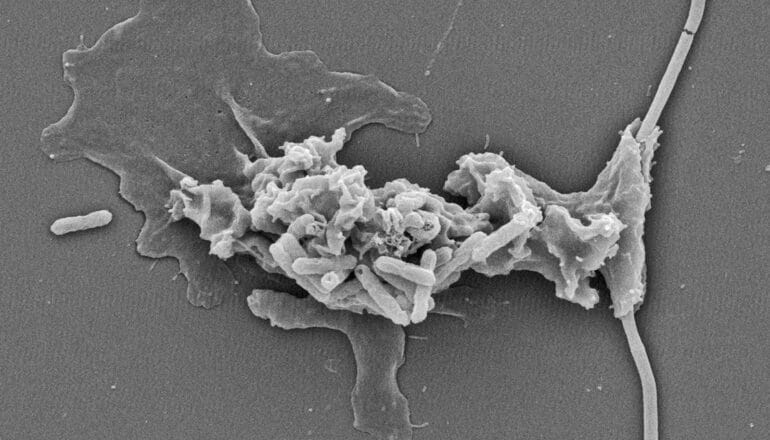
A microscopic view of the Incendiamoeba in black and white.

Biologists have discovered a record-breaking “fire amoeba” that thrives at 63°C (145°F), rewriting the rules for complex cells.

For decades, scientists have relied on a simple rule of thumb: temperatures above 60°C (140°F) should prevent complex cells from surviving. The newly discovered heat-loving amoeba is now challenging that assumption.

Microbiologists have long studied extreme environments to understand “how life can survive at the edges of its limits,” says biologist Angela Oliverio, an assistant professor at Syracuse University and a coauthor of the recent Cell study documenting the newly discovered organism.

This fundamental question, she notes, “helps inform our search for how life might exist elsewhere in the universe.”

Most of this research has focused on bacteria and archaea, which lack nuclei and the complex internal structures found in eukaryotic cells. Far less is known about how eukaryotic life responds to extreme heat.

That question led Oliverio and Beryl Rappaport, a PhD candidate in her lab, to California’s Lassen Volcanic National Park. There, they sampled geothermal sites with collaborators Gordon Wolfe of Chico State and Ken Stedman of Portland State University. Lassen hosts a wide range of chemically diverse, high-temperature geothermal springs, making it an ideal natural laboratory for probing the limits of life. But the team did not find the record-breaking amoeba in one of the park’s famous acidic pools. Instead, it was recovered from an unremarkable-looking tributary. Their discovery underscores how much life may remain hidden in Earth’s extreme habitats.

Fieldwork at Lassen was no walk in the park. Its geothermal areas contain scorching geothermal pools and unstable ground.

“Since we’re sampling from really high-temperature environments, we had to take a lot of safety precautions,” says Rappaport, the study’s lead author.

The team relied on extra-long sampling tools to maintain a safe distance from boiling water and fragile terrain. And in the narrow tributary where the fire amoeba was ultimately discovered, the team even traded standard equipment for makeshift solutions, using barbecue tongs to collect samples in the tight confines of the stream.

Turning up the heat

After bringing samples back to Syracuse, the team began raising the temperature in their incubators. The amoebae continued to grow as temperatures increased from 57°C to 60°C. They kept dividing at 63°C (145°F), setting a new record for eukaryotic life. At 64°C, they were still motile. At 70°C (158°F), they formed cysts, dormant structures that can survive the extreme conditions and reactivate when temperatures cool.

Biologists previously theorized that eukaryotic membranes could not remain stable above roughly 60°C (140°F). This new organism, which they’ve named Incendiamoeba cascadensis, Latin for ‘fire amoeba from the cascades’, reflects both its heat tolerance and the region where it was discovered.

“What we thought was true is not,” Oliverio says, emphasizing how the new data expands the realm of what is biologically possible. She adds that many more heat-tolerant eukaryotes may remain undiscovered.

Understanding the thermal limits of life can help scientists narrow the search for life beyond Earth. Temperature, pH and pressure all place physical constraints on where organisms can survive.

“By expanding the known thermal range for complex life, the discovery opens new possibilities for where eukaryotes might exist,” says Oliverio. That includes extreme environments on Earth and potentially other planets.

Looking ahead

The implications extend beyond astrobiology. The organism may offer new insights for biotechnology. Cellular adaptations that help membranes and proteins may eventually inform the development of thermostable enzymes, more resilient biomaterials, or high-temperature bioprocesses. Current genomics and sequencing technologies make it possible to investigate these adaptations in ways that were far more difficult just two decades ago.

The research also extends beyond Incendiamoeba. Using the same culturing techniques, members of the Oliverio lab are discovering additional extreme microbes, even on campus. Undergraduate students are investigating how similar heat-loving organisms colonize human-made environments.

One case study focuses on a steam pipe on SUNY College of Environmental Science and Forestry’s campus. By collecting samples from high-temperature soils and surfaces exposed to steam, then culturing the microbes they find, students are learning that extreme microbes aren’t confined to hot springs or deep-sea vents. They can also thrive in unexpected human-made environments.

For Rappaport, part of the thrill comes from seeing something entirely new under the microscope. She recalls the first time the amoebae crawled across the flask. “Seeing organisms that maybe no one has seen before is just an incredible feeling,” she says.

Oliverio sees the discovery as a reminder that the boundaries of life are not always where scientists expect them to be. “We should expand our search,” she says.

This research was supported by the National Science Foundation, NASA, the American Physical Society, the National Institutes of Health, the Howard Hughes Medical Institute, the Water and Life Interface Institute, the Alfred P. Sloan Foundation, Syracuse University, the European Commission, the European Molecular Biology Laboratory, the Swiss National Science Foundation, the Gordon and Betty Moore Foundation, and the US Department of Energy Office of Science.

Source: Syracuse University

The post Record-breaking ‘fire amoeba’ can thrive at 145°F appeared first on Futurity.


from Futurity https://ift.tt/pGZBbyq

Wednesday, September 23, 2026

Creatine’s benefits may go beyond the gym for older adults

The word "creatine" is written in creatine powder on an orange background.

New research suggests creatine may help aging adults maintain lean tissue and strength—even without structured exercise.

Creatine has become one of the most talked-about supplements for building muscle, boosting performance, and supporting healthy aging.

The new research suggests its potential benefits may be especially relevant as maintaining muscle becomes more important with age.

In a 12-week study in the Journal of the International Society of Sports Nutrition, researchers found adults ages 45 to 65 who took creatine gained lean tissue and strength, even without participating in a structured exercise program. Those who combined creatine with exercise saw greater gains.

The findings add to growing interest in creatine beyond its familiar role as a supplement popular with athletes, including its potential role in supporting muscle health as people get older.

The study’s principal investigator, Richard Kreider, professor and director of the Exercise and Sport Nutrition Lab at Texas A&M University, has studied creatine for more than 30 years. The naturally occurring compound helps replenish cellular energy and has been extensively studied for its effects on exercise performance, muscle, and strength. Kreider’s previous research has pointed to potential benefits for health across the lifespan.

The latest study included 64 healthy adults who completed the 12-week intervention. Participants chose whether to take part in a structured exercise and diet-induced weight-loss program or remain in the non-exercise group, then were randomly assigned to take either 10 grams of creatine monohydrate or a placebo each day.

Among those who weren’t in the exercise program, participants taking creatine gained about 2.4 pounds of lean tissue over 12 weeks. They also improved their leg and bench press strength. Participants in the exercise program completed resistance training and aerobic training three times a week. Adding creatine to the diet led to greater gains in leg and bench press strength and time to exhaustion.

One area where creatine did not appear to provide an added benefit was aerobic capacity, which is consistent with creatine primarily enhancing muscular strength and power.

The study also looked at a common challenge with weight loss: losing fat without losing muscle along with it.

Participants in the exercise program followed a diet designed to create a modest calorie deficit. After 12 weeks, those taking creatine had gained nearly three pounds of lean tissue and reduced their fat mass. The exercise-and-diet group taking a placebo showed little change in lean tissue.

Those taking creatine also had a greater reduction in body fat percentage. To the researchers’ knowledge, this is the first study to show that adding creatine to an exercise and diet-induced weight-loss program can produce a greater reduction in body-fat percentage than exercise and diet alone.

The latest findings build on decades of research into creatine’s potential uses beyond athletic performance.

Kreider has previously pointed to its importance throughout the lifespan, including its potential benefits for older adults as they experience age-related declines in muscle mass and cognitive function. The body produces creatine naturally, and it can also be obtained through foods such as meat and fish, though Kreider says many people don’t get enough through diet alone. He notes you would have to eat about five to 10 pounds of meat or fish each day to obtain 10 grams of creatine, making supplementation a more practical and less expensive option.

Creatine is also one of the most extensively studied sports and nutritional supplements. In a 2025 analysis, Kreider and colleagues reviewed 685 clinical trials and found no significant difference in the rate of reported side effects between participants taking creatine and those taking a placebo.

This study was funded by the WoodNext Foundation through the Texas A&M Foundation.

Source: Texas A&M University

The post Creatine’s benefits may go beyond the gym for older adults appeared first on Futurity.


from Futurity https://ift.tt/qTLpzy1

Tuesday, September 22, 2026

Most kids bounced back after COVID disruptions

A young girl wearing a medical mask stands at the front of a line of young school kids in a classroom.

Six years after COVID-19 disrupted childhood around the world, new research following the same children from before and after the pandemic found that the damage was far less widespread than early warnings predicted.

The University of Texas at Austin helped organize a collection of 17 long-term studies from six countries, published together in the journal Child Development, that show most children’s health, learning, social development, and well-being recovered substantially over time.

Early studies of COVID-19, based on short-term data collected during the pandemic itself, warned of widespread and lasting harm to child development.

This new research, which tracked children over a longer period, tells a different story: Pandemic impacts were real and wide-ranging, but not as severe as initially feared, and many effects diminished over time. When lasting setbacks did persist, they were most common among children who were already facing challenges such as financial hardship, limited resources, or other disadvantages before the pandemic began.

“This means children’s resilience ensured the pandemic’s consequences were not universally catastrophic, and they weren’t uniform either, which is a cause for optimism,” says Gabriela Livas, coeditor of the special collection of studies and professor and chair of the human development and family sciences department.

“In fact, children, including some of the most vulnerable kids, weathered the experience in a variety of ways, and there were many factors beyond the pandemic that affected their trajectory in the years before and after COVID-related shutdowns.”

Livas coauthored one of the 17 studies published in the special section, which focused on children from low-income families in three US cities. She looked specifically at vulnerable children in Tulsa, Oklahoma, who had participated in early childhood programs before the pandemic and were later tracked through elementary school. Teachers reported that most behavioral issues remained stable before and after the pandemic, with no increase in attention problems or aggression and only a modest decline in prosocial skills such as sharing, cooperation, empathy, and understanding others’ emotions.

The researchers concluded that early reports about the pandemic’s effects on children may have been overly pessimistic. This was a common theme that emerged across the various studies.

“Overall, the evidence in this special section challenges dominant narratives of universal ‘learning loss,’ suggesting instead that COVID-19 interacted with existing inequalities,” says coeditor Anna D. Johnson of Georgetown University.

“The research highlights the resilience in children and shows the importance of context in shaping their physical, cognitive, and emotional skills over time.”

Source: University of Texas at Austin

The post Most kids bounced back after COVID disruptions appeared first on Futurity.


from Futurity https://ift.tt/twLpTjA