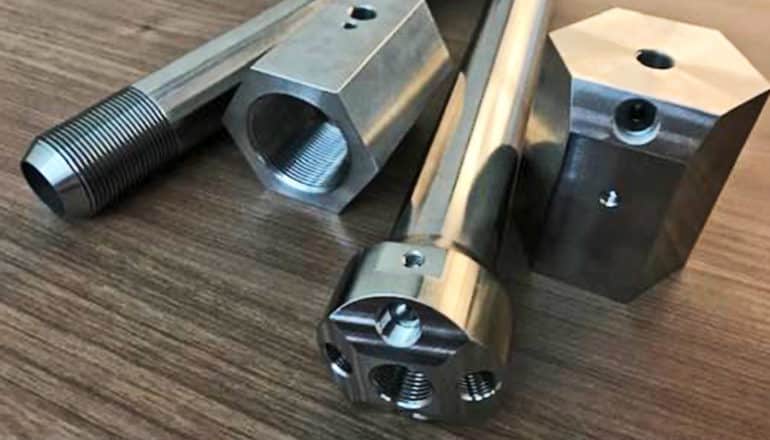
A new reactor completely breaks down hard-to-destroy forever chemicals using “supercritical water,” which is formed at high temperature and pressure, researchers report.
Forever chemicals, named for their ability to persist in water and soil, are a class of molecules that are ever-present in our daily lives, including food packaging and household cleaning products. Because these chemicals don’t break down, they end up in our water and food, and can lead to health effects, such as cancer or decreased fertility.
Last month, the US Environmental Protection Agency proposed to give two of the most common forever chemicals, known as PFOA and PFOS, a “superfund” designation, which would make it easier for the EPA to track them and plan cleanup measures.
Cleanups would obviously be more effective if the forever chemicals could be destroyed in the process.
As reported in Chemical Engineering Journal, the new reactor’s technology could help treat industrial waste, destroy concentrated forever chemicals that already exist in the environment, and deal with old stocks, such as the forever chemicals in fire-fighting foam.

Here, Igor Novosselov, a research associate professor of mechanical engineering at the University of Washington, talks about the details:
The post Reactor uses ‘supercritical’ water to destroy forever chemicals appeared first on Futurity.
from Futurity https://ift.tt/skGjCcr

No comments:
Post a Comment