The “love hormone” oxytocin plays a role not only in moments of intimacy but also in competitive situations.
Researchers at the University of Zurich (UZH) have shown that oxytocin levels increase when rivalry or clearly defined groups are involved—particularly in men.
“Previous work showed that receiving oxytocin via a nasal spray can make people more ‘groupish’,” says Charlotte Debras from UZH’s Institute of Evolutionary Medicine, who conducted the study as part of her doctoral research.
“But it wasn’t known whether OT naturally increased during group competition.”
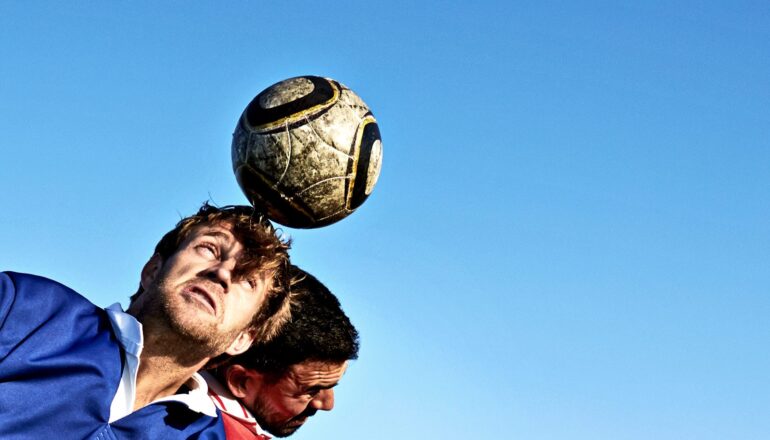
To systematically study competition, the researchers organized soccer tournaments together with the Indigenous Tsimane’ people in the Bolivian Amazon.
“The Tsimane’ lifestyle has an effect on their hormone levels,” says Adrian Jaeggi, also from UZH’s Institute of Evolutionary Medicine, who has been conducting research on site since 2011.
For example, levels of reproductive hormones like testosterone or progesterone are lower when calories are harder to come by. Meanwhile, the kinds of social factors linked to OT are likely especially important in these highly interdependent societies. To test their hypothesis, the researchers measured oxytocin levels in the urine of soccer players before and after the matches.
Oxytocin levels increased most strongly after matches against familiar rivals but less so among teams from different communities. When Tsimane’ played against non-Tsimane’ people, however, the increase was again higher.
“This suggests that oxytocin is sensitive to the salience of the opposition—showing heightened reactivity both toward familiar competitors and toward a clearly defined out-group,” says Jaeggi.
One particularly striking finding of the study was that women’s OT levels did not differ before or after games, unlike men’s. Debras mentions several possible explanations for this.
“Firstly, women start from higher baseline levels, as many of them were breastfeeding, which could make it harder to detect a change.”
It is also possible that soccer may not hold the same significance for women, as they play less often than men. Another explanation is provided by the “male warrior hypothesis,” which proposes that men have evolved to be generally more invested in group competition.
“The most important forms of rivalry for Tsimane’ women may involve relational dynamics, such as managing reputations or jostling for social support, rather than physical competition,” says Debras.
The study does not make it possible to determine whether the increase in OT primarily promotes cohesion within the team or competition with the opposing group. In team sports, both aspects are closely intertwined.
“Cooperation can be a successful way to compete in the game of life, and OT seems to be a key ingredient for this,” says Jaeggi. “OT has been linked to group conflict in many different species, from fish to chimpanzees. Our findings suggest that similar mechanisms are at play in humans.”
The research appears in the Proceedings of the Royal Society B.
Source: University of Zurich
The post ‘Love hormone’ plays a role in group competition appeared first on Futurity.
from Futurity https://ift.tt/QNpPmR6

No comments:
Post a Comment